Across Australia, our Rural Generalists are making a meaningful impact in their communities, shaping stronger healthcare systems, and forging diverse and inspiring career paths. Many ACRRM members have also been recognised nationally, receiving awards for their leadership, dedication, and contribution to rural and remote medicine.
Explore our collection of member stories to discover the real experiences behind rural generalism - the challenges, the rewards, and the journeys that define our College.
If you’re an ACRRM Rural Generalist and would like to share your story, we’d love to hear from you. Contact us at communications@acrrm.org.au.
You are currently on:

Why did you choose to be an RG?
I didn’t know it had a name at the time, I just worked the jobs that I liked the sound of. I went to sea, I went to Antarctica and I went to Macquarie Island and worked on the North-West coast of Tasmania. I learned the things I needed to know to do that work and ended up a Rural Generalist.
Why did you choose ACRRM?
ACRRM was always on my mind since I was a John Flynn Scholar on Lord Howe Island with RG Dr Frank Reed. Then Dr Jeff Ayton at the Polar Medicine Unit encouraged me to pursue ACRRM training while I was working for the PMU. It was the correct decision. I trusted my mentors and took the leap of faith. My advice to students - trust your mentors! Find the people that are doing the work you want to do - really doing it - and ask them for their advice.
What does your rural generalist practice look like now?
My career has taken me to sea, Antarctica, Macquarie Island, Myanmar, the Solomon Islands and rural Tasmania. My ACRRM training helped me build the breadth of skills needed for that work. Those experiences continue to shape how I practise: understanding what a community needs, working within the resources available and developing the skills to contribute.
I now divide my time between Tasmania and Queensland, providing Rural Generalist services in rural hospitals alongside running my Tasmanian video-telehealth practice; The ADHD GP. I have recently registered my speciality as a Rural Generalist with Ahpra and hold credentials for rural emergency department work in North Queensland and across Tasmania.
How has mental health become part of your work?
Expanding my mental health skills has become an important part of my development as a Rural Generalist. I am currently completing the RANZCP Certificate of Postgraduate Training in Clinical Psychiatry, building on my experience in general practice and rural hospital care. My focus is on thoughtful assessment, management planning, clinical risk and collaboration across hospital and community settings. This is a continuing area of professional development that extends beyond my particular interest in ADHD.
How does the ADHD GP fit in with rural generalism?
I have developed The ADHD GP as a Tasmanian video-telehealth service providing GP-led ADHD assessment, advice and ongoing care in collaboration with patients’ regular GPs. Adults, young people and families with children aged six and over can request an appointment, with the appropriate pathway determined by individual circumstances and clinical needs.
The service allows me to maintain continuity with my Tasmanian patients while working between the two states. Where telehealth is appropriate, patients can access an assessment and follow-up from their own location, in collaboration with their regular GP.
I see this as complementing local general practice care. A patient’s regular GP may not offer ADHD assessment or medication initiation within their current scope, but remains central to their broader healthcare. My role can include new ADHD assessments, advice and review for people with an existing diagnosis, management planning and ongoing care, with communication and handover to support care with the regular GP where appropriate.
For me, rural generalism means continuing to develop the skills and services that communities need. Combining rural hospital work with mental health training and a collaborative telehealth practice allows me to contribute to both acute care and longer-term patient relationships. Developing my mental health scope further is an important part of the next stage of my Rural Generalist career.
Do you have any tips for medical students and junior doctors who are thinking about a career in rural medicine?
The best way to get medical students excited about rural medicine is to get them into rural placements and connected with Rural Generalists.
When I met with final-year students at UTAS, they all wanted to be emergency doctors. None of them were interested in becoming Rural Generalists. But when I asked them what else they wanted from their careers, they said they wanted to go to Antarctica.
I told them, “You will need to come through Rural Generalist training if you want to go to Antarctica.” They looked completely confused.
There is a real disconnect. Students are not always exposed to the possibilities of Rural Generalism, so they can be left confused about their options and take a long time to discover ACRRM.
ACRRM can be the answer to the question, “What training pathway will keep my options open?” It can also be the pathway to opportunities students may not even realise are possible, like working as a doctor in Antarctica.
We need to get students in front of the stories. They need to meet Rural Generalists, hear what they do and see the possibilities for themselves.
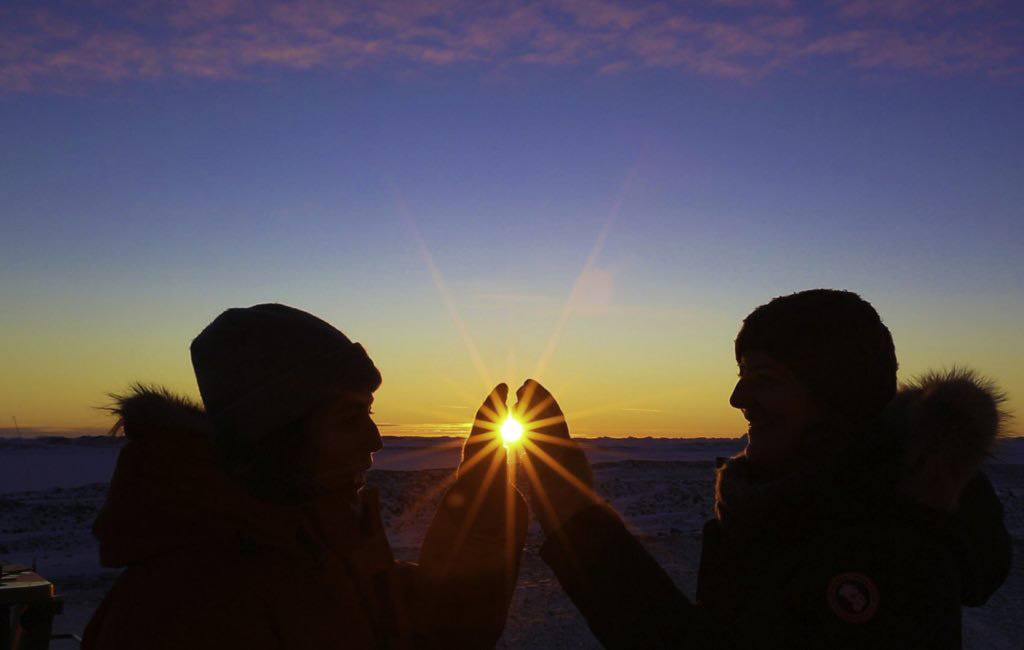
Photos of Dr Meg McKeown