ACRRM accredited training posts are in rural, regional and remote locations. They include general practices, Aboriginal Medical Services (AMS), hospitals, emergency departments and retrieval services.
Browse training posts
Each training post provides access to accredited supervisors to ensure registrars can obtain quality professional development and support to provide healthcare in a safe and effective manner.
Accredit your practice
Shape the future of rural healthcare by providing registrars a space to train under supervision to meet ACRRM Fellowship requirements.
Aboriginal Medical Services
Consider your Rural Generalist training in an Aboriginal Medical Service (AMS) for a career forging experience that directly improves health inequality for First Nations communities.
Training post spotlight
.png?sfvrsn=2facd87e_3)
Working in the Top End of the Northern Territory is a unique and rewarding experience. Royal Darwin Hospital (RDH) is the only tertiary centre servicing this large region, spanning from East Arnhem Land, down to the Big Rivers region and across the West Daly region on the Western Australia border.
The paediatric department at the RDH supports the regional hospitals in Katherine and Gove, as well as going on regular outreach trips to the remote Aboriginal communities across the Top End. This training post provides ACRRM registrars with an opportunity to develop extended skills in paediatric medicine to support independent practice as a Rural Generalist, addressing both acute and non-acute childhood and adolescent presentations.
Why train here
- Extensive clinical exposure: Trainees are exposed to Aboriginal and Torres Strait Islander Health, tropical medicine as well as fascinating general paediatric medicine. An important aspect of the 12-month rotation includes a focus on acute inpatient presentations and experience in remote outreach visits.
- Research opportunities: General paediatricians, neonatologists and specialists in infectious diseases, cardiology and endocrinology are on site. Many of the consultants also work for the Menzies School of Research, with multiple research opportunities for ACRRM registrars available.
- Gain broad experience in general paediatrics: Registrars complete six months of acute paediatrics, including ward, ED, Special Care Nursery and after-hours work, followed by six months in outpatient paediatrics. The outpatient rotation includes general paediatrics, endocrinology, cardiology and allergy clinics, as well as outreach to remote communities, providing broad clinical experience across a range of paediatric settings. Registrars also gain experience in infectious disease and child protection.
- Multidisciplinary learning: Registrars work within a multidisciplinary team structure, developing the practical skills and collaborative approach needed to provide comprehensive care for children and families in rural and remote settings.
- Learning opportunities: Weekly teaching schedule with almost daily teaching including journal club and paediatric grand rounds.
The combination of hands-on acute care, subspecialty exposure, outpatient medicine and remote outreach makes this AST Paediatrics post highly advantageous for Rural Generalists, providing practical skills and experience that can be applied to caring for young patients in rural and remote communities.
Employment and benefits
- NT Health offers competitive salaries and salary packaging support.
- Relocation allowances for a car or belongings are offered to all doctors moving to the Top End.
- Registrars are eligible for five days of CPD and five days of exam study leave per year, as well as six weeks of annual leave.
About supervisor Dr Anna Lithgow, Paediatrician and co-head of Department
Anna is a general paediatrician and generalist paediatric supervisor with almost two decades of experience caring for children and families across Darwin and the Top End. Her clinical interests include acute paediatric care, adolescent health, allergic disease and Aboriginal child health.
Alongside her clinical work, Anna has broad experience in medical education, leadership, clinician wellbeing and research, including through the PREDICT research network. She is passionate about supporting the next generation of rural generalists and building a skilled, sustainable paediatric workforce for the Northern Territory.
Outside of work, Anna enjoys the Territory lifestyle with her husband and three children, who keep her busy with sport and outdoor adventures. She enjoys trail running and playing the piano.
“I enjoy supervising Rural Generalist trainees because they share the values of broad, patient-centred generalist practice. They are pragmatic, adaptable clinicians who bring a valuable perspective to paediatric training, particularly in resourceful decision-making and caring for children and family across diverse settings.”
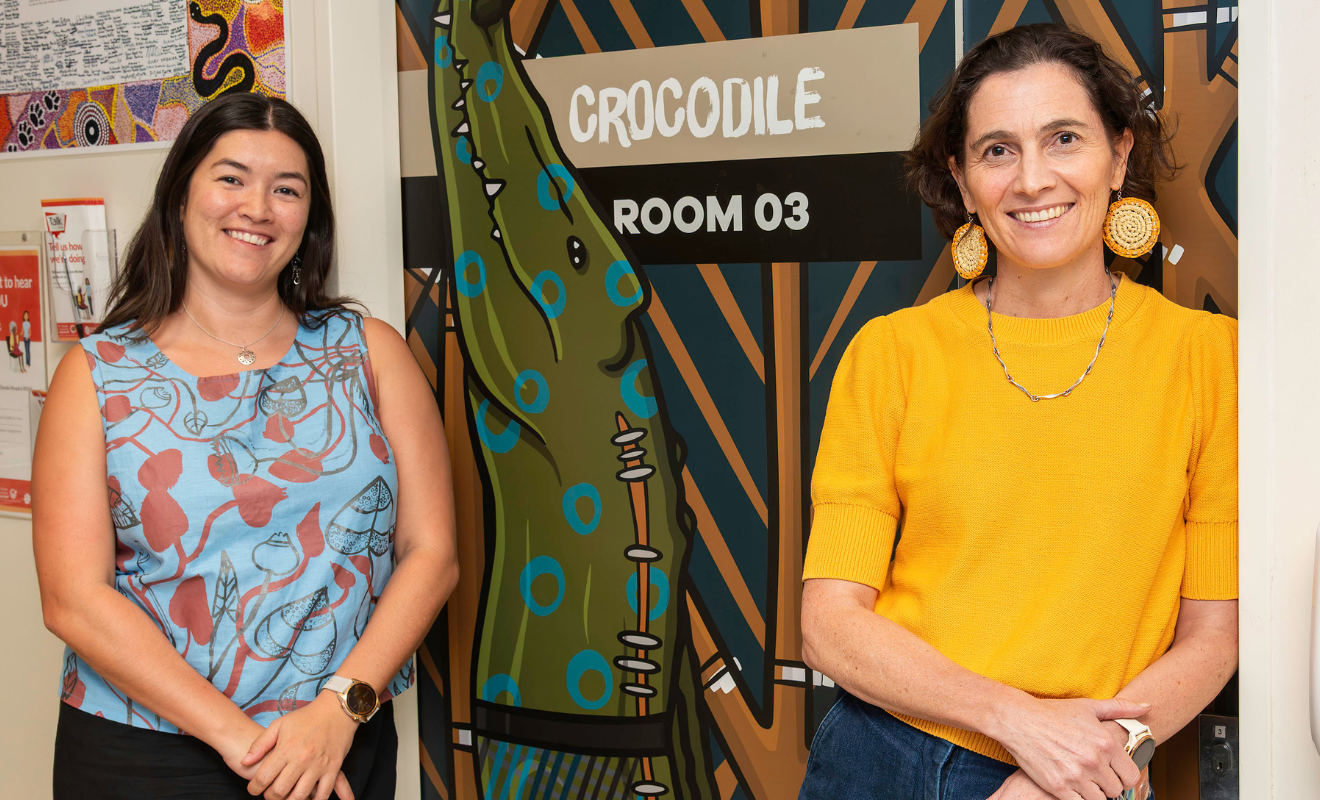
Dr Jennifer (left) and Dr Anna Lithgow (right)
Hear from registrar, Dr Jennifer
“I’m about to finish my 12 months as a paediatric registrar at RDH to complete my AST in paediatrics. I cannot speak highly enough about my experience within this department.”
“Having the opportunity to do six months as an acute hospital-based registrar and six months in outpatient paediatrics has provided me with a huge breadth of experience and exposure to cases. In one year, I’ve been the paediatric registrar on overnight in hospital, attended deliveries and neonatal resuscitations and flown to remote Aboriginal communities for clinics – this is truly the life of an RG Paed!”
“Every advanced trainee and consultant has been incredibly supportive, offering mentorship, teaching and guidance with a real respect for Rural Generalist training and the importance of this pathway for the community.”
“I’m of the (non-biased!) opinion that if you are considering an AST in paediatrics, you cannot look past a position in the Northern Territory. You will see everything from Aboriginal and Torres Strait Islander health, tropical medicine and chronic disease to rare, sub-specialised medicine – all whilst living and working in one of the most beautiful parts of Australia.”
About Darwin
Education and childcare: A wide range of public and private schools, early learning centres and childcare options, as well as tertiary education through Charles Darwin University.
Sport and fitness: AFL is a major part of local culture, alongside rugby, soccer, cricket, netball, basketball, sailing, fishing, water sports, gyms and social sporting clubs.
Arts and community: A multicultural community with regular markets, festivals, live music, local arts and a diverse food scene.
Outdoors: Easy access to national parks, camping, fishing, boating, hiking and freshwater swimming spots, with many outdoor activities enjoyed throughout the dry season.
Liveability: A relaxed tropical lifestyle with distinct wet and dry seasons, a welcoming multicultural community, and convenient access to both urban amenities and some of the Northern Territory's most iconic natural attractions.