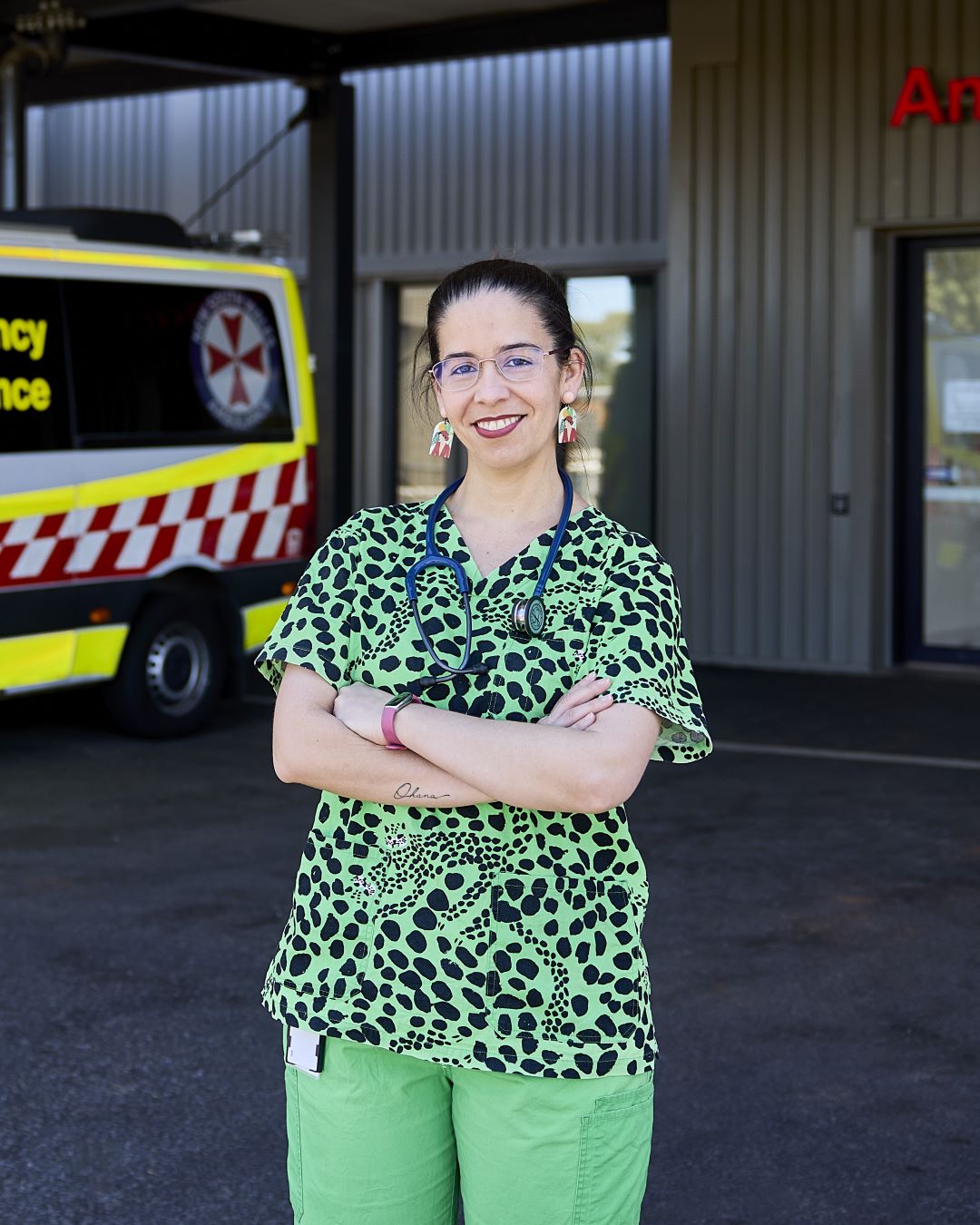
A career as a Rural Generalist is one of the most rewarding and community-driven paths in Australian healthcare, where you make a real difference in the lives of people in rural and remote communities. Rural Generalists are doctors who hold the unique skill set to deliver both comprehensive primary care and advanced procedural skills in rural, remote, and regional communities; communities that depend on them in ways that no other specialty quite replicates.
If you are a medical student or junior doctor considering this path, you are not starting from scratch. There are deliberate, well-supported steps you can take right now, well before you formally enter a training program, to build your foundation and enhance your position as a future Rural Generalist.
What does a Rural Generalist actually do?
No two days look the same for a Rural Generalist. One morning you might be delivering a baby. That afternoon, you are managing a trauma case. By evening, you are supporting a patient's mental health. Rural Generalists provide primary, secondary, and emergency care across a breadth of clinical domains in locations where specialist services are often hours away.
ACRRM Fellowship provides a tailored pathway to this career, accredited by the Australian Medical Council and recognised globally.
Your journey starts before the training program
A common misconception is that the journey to become a Rural Generalist begins when you formally enter a Fellowship training program. In reality, your journey to ACRRM begins much earlier, and the steps you take as a medical student or junior doctor can significantly strengthen your position when you do apply.
Become an ACRRM student member
The first step you should be taking is to join ACRRM as a student member. It is completely free for the duration of your medical degree. ACRRM's free student membership gives you access to online and face-to-face courses and workshops, rural and remote health resources, the Australian Rural Health Journal, a clinical logbook to track and record your skills, and invitations to ACRRM events, including the annual Rural Medicine Australia (RMA) Conference.
Once you graduate, you can upgrade to Ordinary Member (Resident/Intern) status for just $85, maintaining your connection to the College as you progress through your junior doctor years.
Join a state-based Rural Generalist pathway
As a junior doctor, explore state-based Rural Generalist pathways to access rotations in rural primary care. These pathways provide recognition of prior learning when you eventually apply for the Fellowship program.
Seek the right rotations early
The Australian Primary Care Prevocational Program (APCPP) is a nationally delivered initiative that partners hospitals with primary care settings to provide eligible prevocational and junior doctors with general practice experience in areas of community need, this includes distribution priority areas, aboriginal medical services, and rural and remote locations.
Seeking out an APCPP rotation as a junior doctor is a strategic move that not only builds your clinical skills but also demonstrates a genuine commitment to rural medicine.
Explore funding and scholarship opportunities
There are several financial support options available to help reduce the cost of pursuing a rural medical career. The HELP for Rural Doctors initiative allows eligible doctors to reduce their outstanding HELP debt by working in Modified Monash Model 3–7 areas.
For Aboriginal and Torres Strait Islander medical students, the AMA Indigenous Medical Scholarship ($11,000 per annum for the full course of a medical degree).
The Peggy Hunter Memorial Scholarship Scheme (PHMSS) provide meaningful financial assistance.
Each state and territory also has a dedicated Rural Workforce Agency offering grants, scholarships, and incentives. Locate your region's agency to find out what is available to you.
It is worth noting that eligibility, rather than personal preference, largely determines which funding option is the right fit, so researching your options early is important.
The ACRRM Rural Generalist Fellowship Program
When you are ready to formally enter training, the ACRRM Rural Generalist Fellowship program is a minimum four-year program that combines hands-on clinical training with structured education and assessment. It is competency-based, skills-focused, and designed by rural doctors for rural doctors.
To achieve Fellowship of ACRRM, you must complete:
- 3 years of Core Generalist Training (CGT) in an MMM2-7 location
- 12 months of an Advanced Specialised Training (AST) (2 years for surgery)
- The ACRRM Fellowship Education Program (AFEP)
Core Generalist Training (CGT)
The first three years of Fellowship are dedicated to Core Generalist Training, completed at an ACRRM-accredited training post in an MMM 2–7 location. During CGT you will develop broad knowledge and clinical skills across primary, secondary, and emergency care in a rural and remote context, with a specific focus on paediatrics, obstetrics, and anaesthetics. Training posts include general practices, generalist hospitals, Aboriginal Medical Services, and retrieval services, meaning your classroom can be anywhere from a tropical Queensland town to a remote Western Australian outpost.
Advanced Specialised Training (AST)
Advanced Specialised Training (AST) is a 12-month period of additional training (excluding Surgery, which is 24 months) where you deepen your skills in a procedural or non-procedural discipline of your choosing. AST disciplines include:
- Aboriginal and Torres Strait Islander Health
- Academic Practice
- Adult Internal Medicine
- Anaesthesia
- Emergency Medicine
- Mental Health
- Obstetrics and Gynaecology
- Paediatrics
- Palliative Care
- Population Health
- Remote Medicine
- Surgery
Completing an AST expands your professional scope, can enable clinical privileging in hospitals, and provides access to additional Medicare Benefits Scheme (MBS) item numbers, directly increasing the range of services you can deliver to your community.
Training flexibility and funding
The ACRRM Rural Generalist Fellowship program is designed to accommodate different life circumstances and career stages. Eligible doctors can access Commonwealth funding through the Australian General Practice Training (AGPT) program, which supports both training and education requirements.
For doctors who are not eligible for AGPT funding, ACRRM offers a self-funded route through the Independent Pathway (IP).
Ready to take the next step?
Whether you are still studying, working through your junior doctor years, or ready to formally apply for Fellowship, there is something you can do right now to move your Rural Generalist journey forward.
Start by becoming a free student member of ACRRM, connect with your state's Rural Workforce Agency, and explore what prevocational supports are available to you.
For a full overview of the Fellowship program and to begin your application, visit acrrm.org.au/fellowship.
Rural communities across Australia are counting on the next generation of Rural Generalists. Your journey starts now.