
ACRRM advocates on behalf of members in a range of forums, collaborations, and partnerships. The College regularly engages with policy development, review and reform agendas at national level.
In particular, the College deals with the Commonwealth Department of Health and Ageing, which is the lead agency for primary care matters in Australia and for Medicare Australia. ACRRM provides written submissions, organisational delegations, consultations, and private briefings to a range of national reform agendas.
The College maintains close working relationships with state health agencies to promote mobility of general practice services and support a range of training opportunities and programs. An example is the relationship the College forged with Queensland Health to develop and implement the Rural Generalist Medicine and Generalist Emergency Medicine programs.
The College is actively engaged with a range of government and non-government stakeholders at regional and local levels. Fellows of ACRRM actively participate on clinical privileging committees and within local Divisions of General Practice to contribute to local networks of education, training, and professional support for the specialty of general practice.
Issues
College Presidents hear update from Minister for Health and Ageing
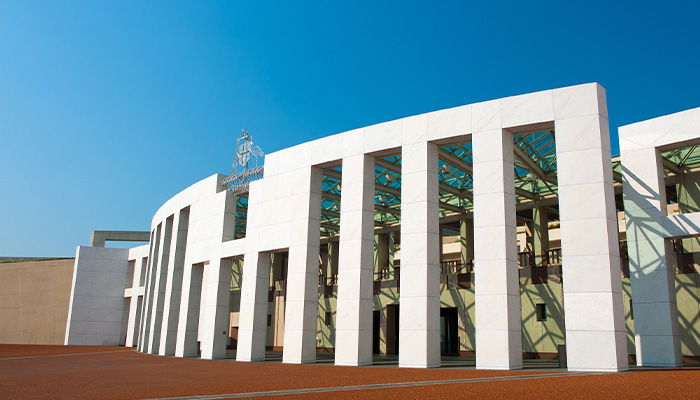
The Minister for Health and Ageing, Tanya Plibersek, addressed the Committee of Presidents of Medical Colleges in Canberra last Friday, 9 May 2013. The key issues she addressed included the training pipeline, the maldistribution of medical practitioners, balancing incentives and regulation to address areas of workforce shortage, and the importance of hospitals ensuring intern planning is well executed. ACRRM is represented on the CPMC by College President, Professor Richard Murray.
Other topics discussed by the committee included progress of the National Medical Training Advisory Network, Medical Board of Australia review of revalidation, registration and rebates for natural therapy providers, and the newly instigated $2,000 tax claim cap on work-related self-education expenses. Read the CPMC's communique.
GP leaders demand no budget cuts to GP care (UGPA media release)
United General Practice Australia (UGPA) - which includes ACRRM – met in Canberra today to discuss a range of issues affecting general practice, with the primary focus on the Government's current review of Medicare rebates for patients with chronic and complex disease.
UGPA members unanimously called on the Minister for Health, Tanya Plibersek, to immediately rule out any cuts to Medicare support for quality GP care in the May budget.
UGPA recommends that the Government review should focus on:
- better supporting long-term structured care for patients
- strengthening the role of the usual GP
- better linking access to allied health services with the clinical needs of the patient and
- reducing red tape.
The leaders said that the Government must recognise the key role that general practice plays in caring for patients with chronic diseases.
Read the UGPA media release.
ACRRM and other GP leaders talk generalism, PIPs, and PCEHR with minister
United General Practice Australia, a peak advocacy body which includes the Australian College of Rural and Remote Medicine, yesterday met Health Minister Tanya Plibersek at Parliament House in Canberra to discuss the major issues affecting general practice. UGPA advised the Minister that 'generalism' needs to be supported and promoted as a critical workforce imperative. The group also raised changes to Practice Incentive Payments, and the imminent implementation of the Personally Controlled Electronic Health Record.
Read the UGPA release on the ministerial discussion.
UGPA submission to Senate Standing Committee on GP mental health services
(5 August 2011)
United General Practice Australia (UGPA), of which ACRRM is a member, has significant concerns regarding the proposed cuts to the Better Access program. These changes will have a major impact on patient access, quality of service, and the overall mental health workforce. The cuts will also erode the major investments made in building and strengthening the primary mental healthcare system over the last ten years .
Specifically, UGPA makes comment on:
1. Changes to the Better Access program
2. Access to mental health services
3. Mental health workforce
4. Mental health compared to physical health.
Read the UGPA's two-page commentary on these four critical point.
Queensland GP Alliance: submission to Senate Standing Committee on GP mental health services
Addressing the cuts to the Better Access program, the Qld GP Alliance subbmision to the Committee pointed out that the cuts will:
- directly affect the affordability of care and patients’ willingness and capacity to seek services
- have a deleterious impact in rural and remote communities and make it harder to develop appropriate packages of coordinated mental health care for people in need in these communities
- have a negative impact in Queensland communities that are recovering from recent natural disasters – there needs to be a spread and variety of mental health services across primary health care services to assist with timely and effective recovery – Better Access is an important component of this spread and variety
- have an undermining effect on GPs continuing involvement in mental health care – the reduced fee will affect GPs’ willingness and predisposition to increase their activity and deepen their skills and knowledge in mental health service delivery.
Read the QGPA submission to the Committee.
Campaign intensifies: GP mental health services
United General Practice Australia (UGPA), Australia's peak general practitioner coalition, put forward to Mental Health Minister Mark Butler and senior advisers from Health Minister Nicola Roxon's office, the case that from November 2011 many people with mental illness would no longer be able to afford to see their GP for mental health plans because the Medicare rebates will be between 25 per cent and 50 per cent lower than today. UGPA pointed out that the Government’s changes mean that Medicare would treat people with mental illness less favourably than people with a physical ailment, with rebates for GP Mental Health Plans dropping to between 10 per cent and 50 per cent lower than GP Management Plans for chronic illness. UGPA remains determined to stay engaged with the Government to have the rebates restored. Read the full media release...
Australian Consensus Statement on the Health Benefits of Work
ACRRM is a signatory to the Australian Concensus Statement on the Health Benefits of Work. At the heart of this consensus statement is a desire to improve the welfare of individuals, families and communities.
As a signatory, the College agrees to:
- promote awareness of the health benefits of work
- offer support and encouragement to those attempting to access the health benefits of work
- encourage employers’ continuing support of workers’ occupational health, and
- advocate for continuous improvement in public policy around work and health, in line with the principles articulated above.
Read the statement and background ...
General registration for medical practitioners with AMC certificate in the standard pathway
ACRRM has responded to the Medical Board of Australia's proposals for granting general registration to medical practitioners in the standard pathway who hold an AMC certificate, and on guidelines for supervised practice for limited registration. ACRRM supports the proposed standards but believes the guidelines would be strengthened with some changes. Read ACRRM's response...
Lack of consultation: patients with diabetes
GP groups disappointed with lack of consultation over policy for patients with diabetes. Read the joint media release...
National Consensus Framework for Rural Maternity Services
The proposal for a National Consensus Framework for Rural Maternity Services grew out of a Symposium on Birthing Services in Small Rural Hospitals: Sustaining Rural and Remote Communities held in Alice Springs, 2005. The symposium was organised by the Rural Doctors Association of Australia (RDAA) and the Australian College of Rural and Remote Medicine (ACRRM) with funding from the Commonwealth Department of Health and Ageing. RDAA subsequently secured funding from the Department to develop a Framework in collaboration with the Australian College of Midwives, ACRRM, the Royal Australian and New Zealand College of Obstetricians and Gynaecologists, the National Rural Faculty of the Royal Australian College of General Practitioners and Rural Health Workforce Australia. A Management Group consisting of representatives from all six organisations directed this challenging work. Read the framework document.